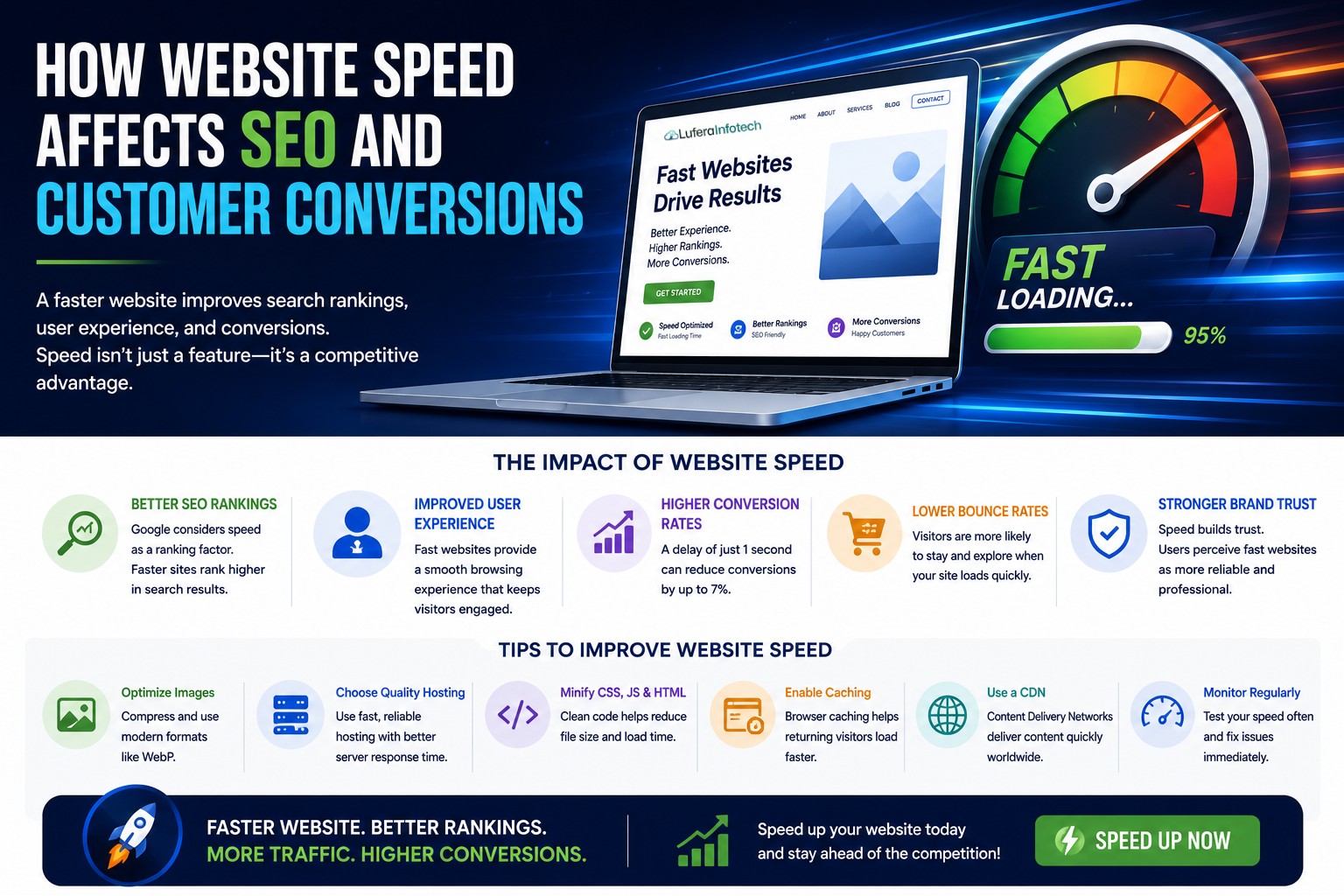

How Website Speed Affects SEO and Customer Conversions
In today's digital landscape, speed matters more than ever. Internet users expect websites to load almost instantly, and even a few seconds of delay can significantly impact user experience, search engine rankings, and conversion rates.
Whether you run an eCommerce store, corporate website, service-based business, or startup, website speed directly influences how visitors interact with your brand online.
A fast-loading website not only improves customer satisfaction but also plays a crucial role in search engine optimization (SEO), lead generation, and revenue growth.
In this guide, we'll explore how website speed affects SEO and customer conversions, and why optimizing performance should be a top priority for every business.
What Is Website Speed?
Website speed refers to how quickly a webpage loads and becomes fully interactive for visitors.
Several factors contribute to website speed, including:
- Server response time
- Image optimization
- Code efficiency
- Hosting quality
- Browser caching
- Content Delivery Networks (CDNs)
- Third-party scripts and plugins
The faster your website loads, the better the experience for users and search engines alike.
Why Website Speed Matters
Visitors have little patience when browsing online. If a website takes too long to load, users are more likely to leave before engaging with your content or services.
Website speed impacts:
- User experience
- Search engine rankings
- Bounce rates
- Lead generation
- Customer trust
- Online sales
- Brand perception
In a competitive online environment, speed can often be the difference between winning and losing a customer.
How Website Speed Affects SEO
1. Speed Is a Google Ranking Factor
Google considers page speed as part of its ranking algorithm.
Websites that load quickly provide a better user experience and are more likely to rank higher than slower competitors.
Search engines prioritize websites that deliver valuable content efficiently and reliably.
2. Improved Core Web Vitals Performance
Google uses Core Web Vitals to evaluate website performance and user experience.
These metrics include:
- Largest Contentful Paint (LCP)
- Interaction to Next Paint (INP)
- Cumulative Layout Shift (CLS)
Faster websites typically perform better on these metrics, improving their chances of ranking higher in search results.
3. Lower Bounce Rates
Visitors often abandon slow websites before viewing content.
High bounce rates can signal to search engines that users are not finding the experience satisfactory, potentially impacting rankings.
4. Better Crawl Efficiency
Search engine bots have limited resources when crawling websites.
Faster websites allow search engines to crawl more pages efficiently, improving indexation and visibility.
5. Enhanced Mobile SEO
Google primarily uses mobile-first indexing.
Since mobile users often experience slower network connections, website speed becomes even more critical for maintaining strong rankings.
How Website Speed Affects Customer Conversions
1. Faster Websites Create Better First Impressions
Your website is often the first interaction potential customers have with your business.
A fast-loading website immediately creates a sense of professionalism and reliability.
Slow websites, on the other hand, can make businesses appear outdated or untrustworthy.
2. Improved User Experience
Visitors want information quickly and without frustration.
Fast websites allow users to:
- Browse smoothly
- Find information quickly
- Navigate effortlessly
- Complete desired actions faster
Positive user experiences increase the likelihood of conversions.
3. Higher Lead Generation Rates
Every second matters when capturing leads.
Faster websites encourage users to:
- Submit contact forms
- Request quotes
- Book consultations
- Subscribe to newsletters
Reduced friction often results in more qualified leads.
4. Increased eCommerce Sales
Website speed is especially important for online stores.
Slow-loading product pages and checkout processes can lead to abandoned carts and lost revenue.
Faster eCommerce websites often experience:
- Higher conversion rates
- Increased average order values
- Reduced cart abandonment
- Greater customer satisfaction
5. Stronger Customer Trust
Customers associate fast websites with professionalism and competence.
When a website performs smoothly, users are more likely to trust the business and engage with its products or services.
Common Causes of Slow Websites
Several issues can negatively impact website performance:
- Large unoptimized images
- Excessive plugins
- Poor-quality hosting
- Bloated code
- Too many third-party scripts
- Lack of caching
- Large video files
- Unoptimized databases
Identifying these issues is the first step toward improving speed.
How to Improve Website Speed
Optimize Images
- Compress image files
- Use modern formats such as WebP
- Resize images appropriately
Choose Quality Hosting
- Invest in reliable hosting providers
- Consider cloud hosting solutions
- Use dedicated resources when necessary
Minimize Code
- Remove unused CSS and JavaScript
- Minify code files
- Reduce unnecessary plugins
Enable Caching
Caching stores frequently accessed content, reducing load times for returning visitors.
Use a Content Delivery Network (CDN)
CDNs distribute website content across multiple servers worldwide, improving loading speeds for users in different locations.
Monitor Performance Regularly
Use tools such as:
- Google PageSpeed Insights
- Google Lighthouse
- GTmetrix
- Pingdom Website Speed Test
Regular monitoring helps identify performance issues before they impact users.
Website Speed Best Practices for Businesses
- Prioritize mobile optimization
- Use lightweight website frameworks
- Implement lazy loading
- Reduce HTTP requests
- Optimize fonts and media files
- Maintain updated software and plugins
- Perform regular speed audits
Final Thoughts
Website speed is no longer just a technical consideration—it's a critical business factor. Faster websites improve SEO performance, enhance user experiences, build customer trust, and increase conversions.
In an era where users expect instant access to information, businesses that prioritize website performance gain a significant competitive advantage.
Whether your goal is to improve search rankings, generate more leads, or increase sales, optimizing website speed should be a key part of your digital strategy.
Ready to Improve Your Website Performance?
At Lufera, we build high-performance websites optimized for speed, SEO, user experience, and conversions. Our team helps businesses create fast, scalable, and results-driven websites that support long-term growth.
Whether you need a website audit, performance optimization, or a complete website redesign, we're here to help.
Contact Lufera today and discover how a faster website can accelerate your business growth.