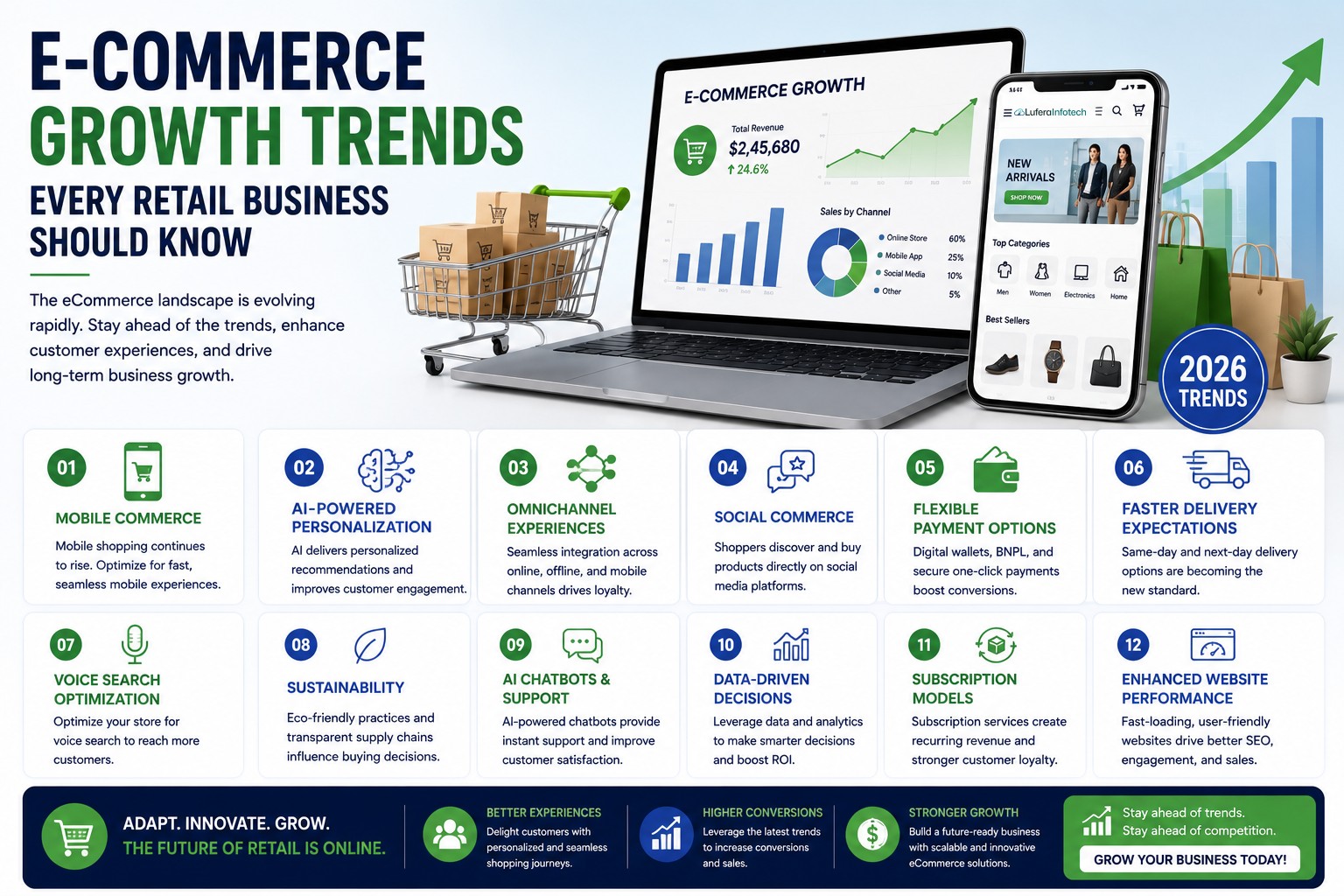

E-Commerce Growth Trends Every Retail Business Should Know in 2026
The eCommerce industry continues to evolve at an unprecedented pace. Consumer expectations, emerging technologies, and changing shopping behaviors are reshaping how retail businesses operate online. As competition grows, retailers must stay ahead of the latest trends to remain relevant, attract customers, and increase revenue.
In 2026, successful eCommerce businesses are focusing on customer experience, personalization, mobile-first shopping, artificial intelligence, and seamless omnichannel experiences. Understanding these trends can help retailers make smarter decisions and capitalize on new growth opportunities.
In this guide, we'll explore the most important eCommerce growth trends every retail business should know.
Why Keeping Up with E-Commerce Trends Matters
Consumer behavior is constantly changing. Businesses that adapt quickly can:
- Increase online sales
- Improve customer retention
- Strengthen brand loyalty
- Enhance shopping experiences
- Gain a competitive advantage
- Maximize marketing ROI
Staying informed about industry trends allows retailers to anticipate customer needs and invest in technologies that drive growth.
1. Mobile Commerce Continues to Dominate
Mobile devices have become the primary shopping channel for many consumers. Shoppers increasingly browse products, compare prices, and complete purchases directly from their smartphones.
Retailers should prioritize:
- Mobile-friendly website design
- Fast page loading speeds
- Simplified checkout processes
- Mobile payment integrations
- Responsive user experiences
Businesses that optimize for mobile commerce are more likely to capture and convert modern shoppers.
2. AI-Powered Personalization
Customers expect personalized shopping experiences.
Artificial Intelligence (AI) enables retailers to deliver:
- Personalized product recommendations
- Dynamic pricing strategies
- Customized email campaigns
- Predictive shopping suggestions
- Behavior-based marketing
Personalized experiences increase customer engagement, conversion rates, and repeat purchases.
3. Omnichannel Retail Experiences
Modern consumers expect a seamless experience across multiple channels.
Successful retailers are integrating:
- Online stores
- Physical retail locations
- Mobile apps
- Social media platforms
- Customer support channels
Omnichannel strategies provide consistent customer experiences and improve brand loyalty.
4. Social Commerce Growth
Social media platforms are becoming powerful sales channels.
Platforms such as Instagram, Facebook, TikTok, and Pinterest allow users to discover and purchase products directly within the platform.
Benefits of social commerce include:
- Increased product visibility
- Shorter buying journeys
- Improved customer engagement
- Higher conversion opportunities
Retail businesses should integrate social selling into their digital strategy.
5. Faster and More Flexible Payment Options
Consumers want convenient and secure payment methods.
Popular payment trends include:
- Digital wallets
- Buy Now, Pay Later (BNPL)
- UPI payments
- Contactless transactions
- One-click checkout
Offering multiple payment options reduces cart abandonment and improves customer satisfaction.
6. Faster Delivery Expectations
Speed has become a major factor in purchasing decisions.
Customers increasingly expect:
- Same-day delivery
- Next-day shipping
- Real-time order tracking
- Flexible delivery options
Retailers that improve fulfillment processes can gain a significant competitive advantage.
7. Voice Search Optimization
Voice-enabled devices are changing how consumers search for products online.
Businesses should optimize product pages and content for conversational search queries to improve discoverability.
Voice search optimization is becoming an important component of modern SEO strategies.
8. Sustainability Influences Buying Decisions
Consumers are becoming increasingly conscious of environmental and social issues.
Retailers are responding by implementing:
- Eco-friendly packaging
- Sustainable sourcing
- Carbon-neutral shipping options
- Transparent supply chains
Sustainability initiatives can improve brand reputation and customer loyalty.
9. AI Chatbots and Automated Customer Support
Customers expect immediate assistance when shopping online.
AI-powered chatbots help businesses:
- Answer common questions
- Provide product recommendations
- Track orders
- Offer 24/7 customer support
Automation improves efficiency while enhancing customer experiences.
10. Data-Driven Decision Making
Retailers are increasingly relying on analytics to drive business growth.
Valuable insights can be gathered from:
- Customer behavior analysis
- Purchase patterns
- Website performance metrics
- Marketing campaign results
- Inventory trends
Data-driven strategies enable smarter business decisions and improved profitability.
11. Subscription-Based E-Commerce Models
Subscription services continue to grow across industries.
Businesses are offering:
- Monthly product boxes
- Membership programs
- Recurring purchases
- Premium customer benefits
Subscription models provide predictable revenue and stronger customer retention.
12. Enhanced Website Performance and UX
Website speed and user experience remain critical factors for eCommerce success.
High-performing websites help:
- Improve SEO rankings
- Reduce bounce rates
- Increase conversion rates
- Boost customer satisfaction
Investing in website optimization remains one of the highest-return strategies for online retailers.
How Retail Businesses Can Prepare for the Future
To stay competitive in 2026 and beyond, retailers should:
- Invest in modern eCommerce platforms
- Prioritize mobile experiences
- Leverage AI and automation
- Improve customer personalization
- Optimize website performance
- Adopt omnichannel strategies
- Use data-driven insights
Businesses that embrace innovation will be better positioned to adapt to changing customer expectations.
Final Thoughts
The eCommerce landscape is evolving rapidly, creating both challenges and opportunities for retail businesses. Trends such as mobile commerce, AI-powered personalization, social selling, omnichannel experiences, and faster fulfillment are reshaping how customers shop online.
Retailers that stay ahead of these trends can improve customer experiences, increase conversions, and achieve sustainable growth in an increasingly competitive market.
Ready to Grow Your E-Commerce Business?
At Lufera, we develop high-performance eCommerce websites that help businesses increase sales, improve customer experiences, and stay ahead of industry trends.
Whether you're launching a new online store or upgrading an existing platform, our team can help you build a scalable, SEO-friendly, and conversion-focused eCommerce solution.
Contact Lufera today and take your eCommerce business to the next level.